
Loading...
Published on January 2, 2026 By 800ZED
Hala… what if your sex life is quietly reporting on your health status and you didn’t even know it? 👀
A large US study found that women with low sexual frequency had a significantly higher risk of early death compared to those who were sexually active at least once a week. Suddenly, “wala koy gana karon” hits different, no?
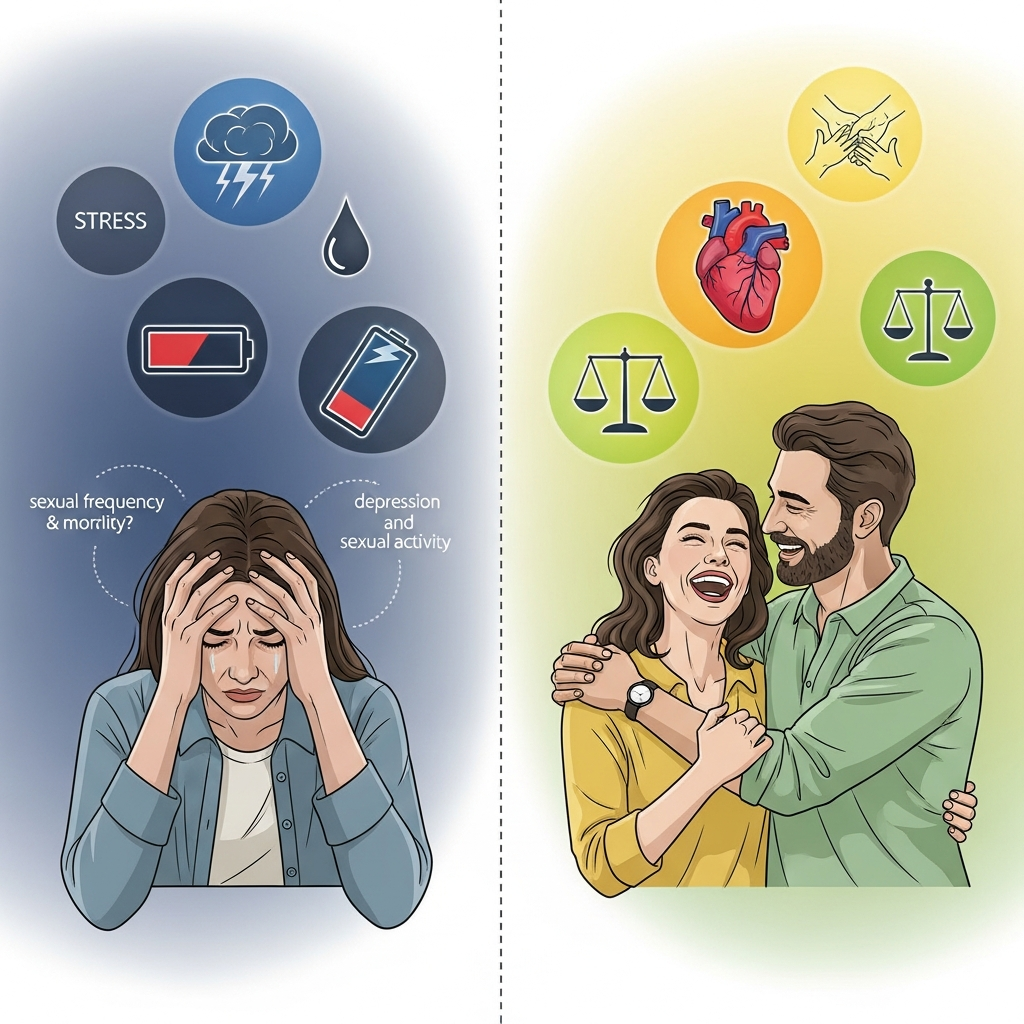 Researchers linked sexual frequency and mortality using long-term data and discovered that for many women, a disappearing sex life can mirror deeper issues like depression, chronic illness, and cardiovascular risk—not just “busy lang” or “stress lang.”
Researchers analyzed health and lifestyle data from more than 14,000 adults aged 20–59 in the United States, using the National Health and Nutrition Examination Survey (NHANES) linked to mortality records.
Here are the key findings in simple terms:
Important: the study shows a link, not automatic cause‑and‑effect. Being less sexually active does not automatically “cause” death, but it may be a warning sign of other physical or mental health issues.
The researchers suggest that sexual activity may be a sort of “health barometer” for women. When a person is physically well, emotionally connected, and mentally healthier, they are often more likely to:
On the flip side, low sexual frequency can be associated with:
In other words, “konti ang sex” is often a symptom, not the root problem.
The study noted that low sexual frequency predicted higher mortality in women in a “dose‑response” way: the less frequent the sex, the higher the risk.
Some possible reasons:
Again, the message is not “have more sex or else,” but “if sex has disappeared from your life and you’re not okay emotionally or physically, wag baliwalain.”
To keep things clear and responsible, here’s what the study does NOT say:
The study simply suggests that low sexual frequency can be a red flag -- especially when combined with depression or existing health issues.
Instead of treating this as just “spicy chismis,” it can be a wake‑up call to check in with your body, your mind, and your relationships.
Consider these steps:

In platforms like 800ZED, women can access primary care and mental health professionals through clinic visits, telemedicine, and ongoing care plans, which make these conversations easier and more affordable.
Ultimately, this research is less about counting how many times a week you “do it,” and more about asking:

Sexual health is part of overall health. When that part of life fades for reasons that don’t feel right, it’s not something to be embarrassed about. It’s something to bring up with a professional who can help you figure out what’s going on.

Copyright © 2026 by 800zed. All Rights Reserved.
We use cookies to give you the best service on our site. By continuing to use the site you consent to our Privacy Policy
📲 Install 800 ZED App for quick access!
📲 Install 800 ZED App on your iPhone
Tap Share → Add to Home Screen
📲 Install 800 ZED on Firefox
Open menu ☰ → Install
Subscribe our newsletter for latest updates
Get the latest updates, promotions, and news delivered straight to your inbox.